SAMSA Workshop
Workshop on Series, Automata, Matrices, Symbolic dynamics, and their Applications
Aim:
The aim of the workshop is to create a fruitful discussion forum for researchers in mathematics and theoretical computer science working on combinatorial, algebraic and algorithmic aspects of
- automata and their matrix representations,
- combinatorial matrix theory,
- linear dynamical systems,
- matrix semigroups,
- power series,
- algebraic program analysis,
- recurrence sequences,
- semigroup theory,
- symbolic computation,
- symbolic dynamics.
The plan is to discuss recent results, emerging research directions, promising applications, open problems and stimulate cooperation among researchers working in these fields.
Programme
The programme will consist of invited talks and tutorials, and short contributed talks from participants.
The Schedule begins with coffee at 9:30am on Monday 15 June. The final scheduled session will end at lunch on Friday 19 June, with the afternoon free for informal discussions (the room is still available).
Schedule
(Room available)
Click the underlined session to jump to the speaker(s) of that session.
Invited Speakers:
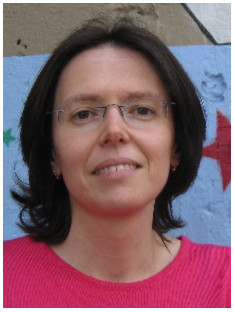
Survey talk: Substitution shifts and recognizability
Abstract (click to expand)
Substitution shifts are symbolic dynamical systems defined by substitutions. In this talk, we study the notions of representability and recognizability of substitutions defined on bi-infinite sequences of symbols (also called points). Representability can be viewed as a form of surjectivity for the substitution, while recognizability is a form of injectivity: it allows one to uniquely desubstitute a sequence y into another sequence x. We introduce the notion of full recognizability, which is connected to circular codes, and discuss recent results on recognizability in substitution shifts and S-adic shifts. Finally, we present some open problems in this area.
The talk is based on joint work with Dominique Perrin, Antonio Restivo, and Wolfgang Steiner.
Tutorial talk: Recognizability of morphisms.
Abstract (click to expand)
We give a combinatorial proof that elementary substitutions are fully recognizable for aperiodic points. We present a very simple proof of the recognizability of a substitution for aperiodic points using the full recognizability of elementary substitutions for aperiodic points.
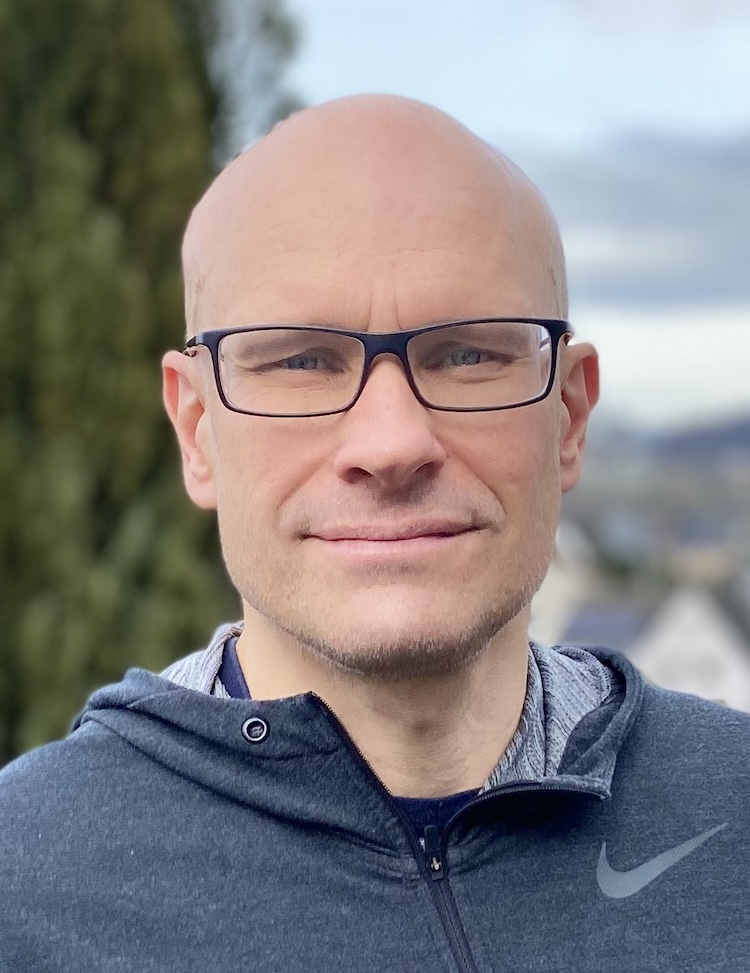
Talk and Tutorial: Membership problems in groups [Slides]
Abstract (click to expand)
A classical decision problem in group theory is the subgroup membership problem: given a finitely generated group $G$, the input consists of a finite list of group elements $g, g_1, \ldots, g_n$ (represented as words over the generators), and the question is whether $g$ belongs to the subgroup generated by $g_1, \ldots, g_n$.
Over the last two decades, several generalizations of the subgroup membership problem have been studied, such as the submonoid membership problem and the rational subset membership problem.
In recent years, significant progress has been made on decidability and complexity questions for various membership problems. We mention a few representative results:
- The speaker showed in 2021 that the subgroup membership problem for the matrix group $\mathrm{GL}(2, \mathbb{Z})$ can be decided in polynomial time when all matrix entries in the input are given in binary notation.
- Romankov (2023) proved that the submonoid membership problem is undecidable in the group of all unitriangular $k$-dimensional integer matrices, provided that $k$ is sufficiently large.
- Bodart (2024) showed that the rational subset membership problem for the Heisenberg group is decidable.
- Bodart (2025) provided the first example of a group $G$ with an undecidable subgroup membership problem such that membership in every fixed finitely generated subgroup of $G$ is decidable.
- Dong (2025), building on results of Shafrir (2024), showed that decidability of the submonoid membership problem is not preserved under finite group extensions.
In my first talk, I will give an overview of these recent developments and discuss open problems. In my second talk, I will provide some technical insights into the proofs.
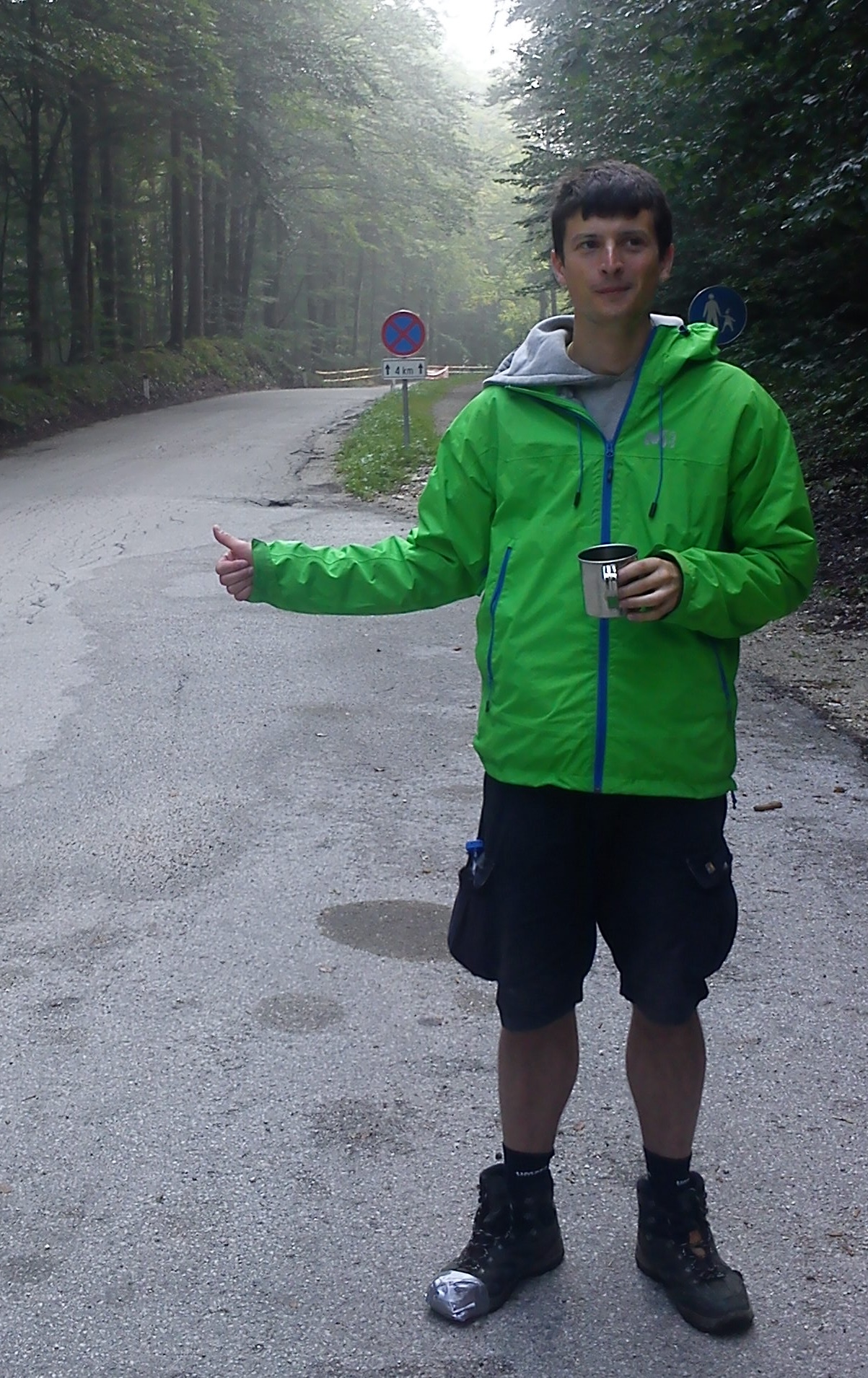
Survey talk: Nonlinear extensions of linear recurrence sequences [Slides]
Abstract (click to expand)
I will go through natural extensions of linear recurrence sequences (LRS). There are three natural but orthogonal extensions: (1) polynomial recurrence sequences, by changing the recurrence from linear functions to polynomials; (2) holonomic sequences which one can think are definable by context-free grammars; (3) WMSO sequences, which come from the Droste-Gastin logic characterising weighted automata. I will also briefly discuss rational recurrence sequences, which naturally generalises (1) and (2) but has some disadvantages.
Tutorial talk: Inexpressiveness results for polynomial recurrence sequences.
Abstract (click to expand)
Following the survey I will show that the sequence $a_n = n^n$ cannot be defined as a polynomial recurrence sequence, which shows that (1) does not contain (3) in the survey talk.
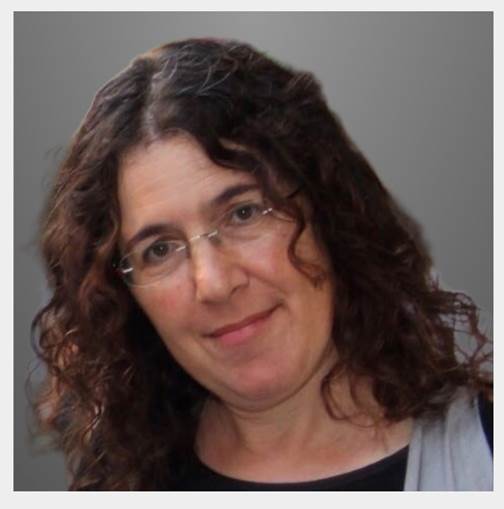
Survey talk: Mathematical and computational perspectives on the Boolean and binary rank and their relation to the real rank [Slides]
Abstract (click to expand)
This talk will survey the main known results and open problems relating to the Boolean and binary rank of 0,1 matrices, with particular emphasis on their relationship to the real rank. We will review the basic definitions of these rank functions and present the main alternative formulations of the binary and Boolean rank, together with their computational complexity and their deep connection to the field of communication complexity. We will see some examples of techniques used to establish lower and upper bounds on the binary and Boolean rank, from both mathematics and theoretical computer science, and also highlight the main mathematical properties of these ranks in comparison with those of the real rank. Finally, we will present some algorithmic approaches for computing and approximating these rank functions.
Tutorial talk: The Boolean and binary rank of Kronecker products: theory and applications. [Slides]
Abstract (click to expand)
The Kronecker product is a useful tool to build large structured matrices from smaller ones, with applications in mathematics and computer science. We will discuss Kronecker products of 0,1 matrices, and applications such as direct sum problems in communication complexity or how Kronecker products are used to amplify the gap between the Boolean, binary and real rank. We will show some of the main mathematical techniques used to give lower and upper bounds on the rank of Kronecker products, as well as prove that the Boolean rank is not always multiplicative under this product. The multiplicativity of the binary rank is still an open problem.
Survey talk: The Status of the Ambiguity Hierarchy of Weighted Automata over Fields [Slides]
Abstract (click to expand)
Weighted automata can be classified according to their degree of ambiguity, ranging from deterministic and unambiguous automata, over finitely and polynomially ambiguous automata, to exponentially ambiguous ones. These classes form a natural hierarchy with strictly increasing expressive power, which gives rise to both structural and algorithmic questions.
From a structural perspective, a central goal is to characterize the functions that can be realized by weighted automata within a given ambiguity class. From an algorithmic viewpoint, given a weighted automaton, we would like to determine the smallest ambiguity class to which it belongs and, when possible, effectively construct an equivalent automaton within that class.
Significant progress has recently been made on these questions, both for tropical semirings and for fields. In this survey, I will present an overview of the current state of the art for weighted automata over fields, highlighting key results, techniques, and remaining open problems.
Tutorial talk: Algebraic Methods for the Ambiguity Hierarchy.
Abstract (click to expand)
Given a function recognized by a weighted automaton over a field, the semigroup generated by its transition matrices plays a central role in determining the ambiguity class of the function. In the special case where all the transition matrices are invertible, we consider the group generated by these transition matrices.
Variations of classical algorithms from computational group theory then become applicable to the problem of deciding the ambiguity class. In this tutorial, I will explain this connection, and discuss some of relevant concepts from algebra that are useful in this context but appear not to have been exploited yet by the WA community (in particular, Wedderburn-Artin Theory).
Participant talks:
We encouraged contributed talks which do not fit in the format of more formal conferences, such as reports on failed attempts, presentations of old results that did not receive enough attention, open-ended potential research directions, unexpected connections between different areas, open problems and possible lines of attack.
Matrix semigroups and weighted automata
Monday 15:30
Peter Kostolányi (Comenius University in Bratislava, Slovakia)
Ambiguity Hierarchies for Weighted Automata over Fields: Strict or Not?
The ambiguity hierarchy of rational series over a field $\mathbb{F}$ and alphabet $\Sigma$ consists of the sets of series realised by the deterministic, unambiguous, finitely ambiguous, polynomially ambiguous, and unrestricted weighted automata over $\mathbb{F}$ and $\Sigma$. While each of these layers is obviously included in the following one, the strictness of the inclusions can depend both on the field $\mathbb{F}$ and on the alphabet $\Sigma$.
The fundamental question about how the strictness of these inclusions depends on the algebraic properties of the field $\mathbb{F}$ has recently been fully answered by the speaker both for unary and for arbitrary finite alphabets. The talk will review a landscape that has been uncovered by these investigations, with emphasis on the most recent and yet unpublished results.
Yahia-Idriss Benalioua (University of Warsaw, Poland)
Is the linear Zariski closure of a context-free language of matrices
computable? [Slides]
Consider the following problem: given a language $L \subseteq \Sigma^*$ and a monoid morphism $\mu \colon \Sigma^* \to \mathbb{Q}^{n \times n}$, compute the linear Zariski closure of $\mu(L)$ (i.e. the smallest union of vector spaces containing $\mu(L)$).
This problem can be considered for different classes of languages. When $L$ is regular, it can be solved using the tools for the computation of the linear hull of a weighted automaton, which is an invariant that plays a central role in deciding the existence of an equivalent deterministic or unambiguous automaton as well as the minimization of equivalent cost register automata.
In this talk, we focus on the setting of context-free languages (CFL). Here, the problem remains open and happens to be an interesting subproblem of the computation of the linear hull for weighted tree automata, which would allow extending the previous results from words to trees on a ranked alphabet.
It has also been considered for the more general Zariski topology in [Ait El Mansour et al., 2026] where it was shown to be decidable for languages recognizable by 1-VASS (which is a subclass of CFL) and undecidable for indexed languages (which generalize CFL).
Based on joint work with Nathan Lhote and Pierre Alain-Reynier.
Roland Guttenberg (University of Warsaw)
Revisiting Finiteness of Matrix Monoids [Slides]
We consider decision problems related to finite monoids of rational matrices.
We show that determining finiteness of a given finitely presented monoid is in PSPACE, improving the known co-NEXPNP bound. We also show that the membership problem for finite matrix monoids is PSPACE-complete, improving the known NEXP upper bound.
Our two complexity results are corollaries of a new polynomial bit-size bound on matrix entries in finite monoids. This is obtained by reduction to the case of matrix groups, using the structure theory of noncommutative algebras and of matrix monoids. Our techniques also give us a polynomial-time algorithm for deciding whether a monoid of rational matrices is conjugate to a monoid of integer matrices.
This talk is based on a paper accepted to ICALP 2026, and is joint work with Rida Ait El Manssour, Nathan Lhote, Mahsa Shirmohammadi and James Ben Worrell.
Neha Rino (University of Warwick, UK)
Fine-Grained Complexity of XNFA and NFA Acceptance [Slides]
XNFAs (also known as XOR-NFAs or symmetric-difference NFAs) are a variant of standard finite automata in which an input word is accepted iff the number of accepting runs is odd. Equivalently, these are weighted automata over the field of two elements, whereas the more familiar nondeterministic finite automata (NFAs) are weighted automata over the Boolean semiring. Much like NFAs, XNFAs recognise exactly the class of regular languages and are exponentially more succinct than DFAs. Unlike NFAs, XNFAs admit efficient complementation and minimisation.
Given an automaton A and a word w, the acceptance problem asks whether A accepts w. In this talk, we compare the acceptance problem for XNFAs and NFAs in a fine-grained manner, focusing on optimising the degrees of polynomials in the running-time bounds. We first refine the upper bounds for the acceptance problem for XNFAs and NFAs of bounded ambiguity (e.g., unambiguous automata). We then show that, under the assumption of polynomial ambiguity, NFA acceptance reduces to XNFA acceptance. This is joint work with Dmitry Chistikov, Radoslaw Piorkowski and Brink van der Merwe.
Semigroups and languages
Tuesday 11:00
Corto Mascle (MPI-SWS, Kaiserslautern, Germany)
Optimal sequential flows and a short-ends factorisation theorem [Slides]
Simon's theorem is a fundamental result in formal languages that lets one factorise words with respect to a finite semigroup. This talk is an advertisement for a Simon-inspired method to compute bounded summaries of words with respect to a finite semigroup, while losing some information. We will see an application of this method for a flow-maximisation problem.
Richard Mandel (Queen Mary University of London)
The Hilbert method for homomorphism equivalence in indexed languages [Slides]
Given a language $L \subset \Sigma^*$ and homomorphisms $h, k\colon \Sigma^* \rightarrow \Sigma^*$, the homomorphism equivalence problem (HEP) asks whether $h$ and $k$ are equivalent when restricted to $L$. We show decidability of the HEP for ET0L languages (a subclass of indexed languages) using a Hilbert method approach, and discuss the obstacles which arise when one attempts to generalize it to the full class of indexed languages.
Reinis Cirpons (Inria, Nantes, France)
Extensions of the Todd-Coxeter algorithm via automata theory [Slides]
The well known Todd-Coxeter algorithm is widely used to construct transformation representations of finitely presented monoids. It can be seen, in some sense, as computing the direct limit of a sequence of semiautomata approximating the right Cayley graph of the underlying monoid. This algorithm can also be used for finitely presented groups and, perhaps more surprisingly, there exists an analogue of the Todd-Coxeter algorithm for inverse monoids due to J. B. Stephen (1987). This is despite the fact that the free inverse monoid is not finitely presented as a monoid. Could it be possible to extend the Todd-Coxeter algorithm to other classes of monoids, such as finitely based varieties of monoids?
In this talk I will briefly describe a category theory based approach to modeling the Todd-Coxeter algorithm and I will present an extension of the Todd-Coxeter algorithm to presentations in finitely based varieties of monoids, motivated by a recent NL-space algorithm for deciding if a monoid identity is modelled by a given finitely generated transformation monoid due to L. Fleisher and T. Jack (2020).
Formal power series
Tuesday 15:30
Lorenzo Clemente (University of Warsaw, Poland)
The Lie rank of a series: Computability and applications [Slides]
The purpose of this presentation is to advertise the notion of Lie rank of a series. It was introduced by Fliess in the 1980's as a generalisation of the notion of Hankel rank (also introduced by Fliess).
The Lie rank is less than or equal to the Hankel rank, and consequently the series of finite Lie rank generalise the rational series (which are those of finite Hankel rank). The pinnacle of the theory is a result of Fliess, who has shown that series of finite Lie rank have minimal automata recognisers.
As a new result, we show that the Lie rank is computable for the class of rational and shuffle-finite series.
This is joint and ongoing work with Nathan Lhote.
Aliaume Lopez (INP Bordeaux, France)
Aperiodicity for Rational Series [Slides]
Aperiodic finite semigroups are part of a beautiful correspondence between restricted automata models, first-order logic on strings, and star-free regular expressions. There have been several propositions for a generalisation of these objects to a weighted setting (preserving said correspondence), defining aperiodic weighted automata, aperiodic matrix semigroups, and star-free rational series. I will present what little is known about these models, and conjectures that are believed to hold in general.
Subbarao Venkatesh Guggilam (University of Warsaw, Poland)
Shuffle-Rational Series, Doubly-Rational Series & Shuffle-Finite
Series [Slides]
Formal power series have long played a central role in both Mathematical Systems Theory and Automata Theory. A foundational result by Marcel-Paul Schützenberger established that recognizable series (the semantics of weighted automata) are precisely the rational series, where rationality is defined via the rational closure under the Cauchy product of non-commutative polynomials.
This connection extends into systems theory through the framework of Chen–Fliess series (named after K. T. Chen & Michel Fliess), where rational series correspond to canonical realizations of bilinear systems.
Motivated by this interplay, a natural question arises: What if we replace the Cauchy product with the shuffle product in forming the rational closure? This leads to the notion of shuffle-rational series. In this talk, we will introduce the concept of shuffle recognizability, and present a Schützenberger-type result showing the equivalence between shuffle rationality and shuffle recognizability. We will also explore the implications of these ideas in the context of nonlinear systems theory.
In a related direction, Schützenberger also proved that rational series are closed under the shuffle product. This observation leads to a second construction: the rational closure of rational series under shuffle—giving rise to doubly-rational series. If time permits, we will discuss the notion of doubly-recognizable series as well, and the relation of all these classes with respect to shuffle-finite series.
The talk is intended to be self-contained and assumes no prior background in systems theory or Chen–Fliess series.
Jakub Byszewski (Jagiellonian University, Poland)
Finite automata and finite-order elements in the Nottingham group [Slides]
The Nottingham group is a profinite group of power series over a finite field, with composition as the group operation. It is known to contain many elements of finite order, but, except in very special cases, no explicit formulas for such elements had been known.
I will explain how finite automata can be used to give explicit descriptions of such elements. The construction uses techniques from algebraic geometry and number theory to produce algebraic power series, which are then converted into automata using Christol's theorem. I will also discuss the problem of finding sparse representatives of some of these elements.
The talk is based on joint work with Gunther Cornelissen, Djurre Tijsma, and Mieke Wessel.
Program analysis and dynamical systems
Wednesday 11:00
Mai-Linh Tran Cong (University of Lorraine, France)
Shapes of potential counterexamples to Nivat's conjecture [Slides]
Given a finite alphabet $A$, we say that a two-dimensional configuration $c$ over $A$ is of low complexity if there exist two integers $M$ and $N$ such that $P_c(M,N) \leq MN$ holds, where $P_c$ denotes the pattern complexity function of $c$. As a potential generalization of the one-dimensional Morse and Hedlund theorem, Nivat's conjecture states that any such configuration must be periodic.
A counterexample to this conjecture would then be a low-complexity but non-periodic configuration. What would such a configuration look like? Could the understanding of its shape reveal the absurdity of its existence? Using a geometric interpretation of underlying algebraic geometry tools developed by Jarkko Kari and Michal Szabados, I will take you through the different attempts we have made at answering those questions.
This work is joint work with Pierre Guillon, Jarkko Kari and Etienne Moutot.
Erdenebayar Bayarmagnai (KU Leuven, Belgium)
Computing polynomial invariants of loops [Slides]
Loop invariants are properties that hold before and after each iteration of a program loop, and they play a central role in program verification by ensuring the correctness of algorithms throughout execution. This talk focuses on polynomial loops, where loop assignments are given by polynomial maps. While computing polynomial invariants for general loops is undecidable, efficient methods exist for certain restricted classes of loops such as solvable loops. I consider a more general setting in which the loop assignments may involve arbitrary polynomials. Using tools from algebraic geometry, I present two algorithms for generating all polynomial invariants of a polynomial loop up to a specific degree. These algorithms differ depending on whether the initial values of the loop variables are fixed or treated as parameters.
Igor Rystsov (National Technical University of Ukraine "Igor Sikorsky Kyiv Polytechnic
Institute", Ukraine)
Synchronization Infinite Automata: Collatz Problem [Slides]
Abstract. We consider famous Collatz problem (the \(3x + 1\) problem) and treated it from the automata theory point of view. New forms of Collatz automata is proposed that can be analytically studied. Let \(C(n)\) be the famous Collatz function \(C(n) = n/2\) if \(n\) is even, and \(3n + 1\) if \(n\) is odd. The autonomous automaton \(A_1 = (\mathbb{N}, \{1\}, \delta_1)\) simulates this function, where \(\mathbb{N}\) is the set of natural numbers, and \(\delta_1(n, 1) = C(n)\) for all \(n \in \mathbb{N}\). According to Collatz conjecture the trivial cycle \((1,4,2)\) will be the attractor for the super-word \(1^\infty\).
Denote by \(\mathbb{N}_0\) and \(\mathbb{N}_1\) the subsets of the even and odd natural numbers, respectively. Let \(\mathrm{ord}(n)\) be the maximal number \(m\) for which \(2^m\) divides \(n\). Consider the autonomous automaton \(A_2 = (\mathbb{N}_1, \{1\}, \delta_2)\), where:
From Collatz conjecture follows that super-word \(1^\infty\) will be synchronizing for the automaton \(A_2\), i.e., the first state 1 will be the attractor \(\mathrm{im}(1^\infty) = \{1\}\).
In the automaton \(A_3 = (\mathbb{N}_1, \{0,1\}, \delta_3)\), versus the automaton \(A_2\), multiplication and division operations is separated
Here we can see for the super-word \((10)^\infty\) struggle between multiplication and division, where division wins.
Keywords: \(3x + 1\) problem, Collatz conjecture, infinite automata.
Sequences
Thursday 11:00
Piotr Bacik (University of Oxford, UK and Max Planck Institute for Software Systems,
Saarbrücken, Germany)
How many zeros can holonomic sequences have? [Slides]
A sequence $(u_n)$ is holonomic (or P-finite) if it satisfies a recurrence $a_d(n) u_{n+d} = a_{d-1}(n) u_{n+d-1} + \cdots + a_0(n) u_n$, with polynomial coefficients $a_i(n)$. In the case where the coefficients are constants, we call $(u_n)$ a C-finite sequence, and in this setting, the celebrated Skolem-Mahler-Lech theorem states that the set of zeros is a union of finitely many arithmetic progressions and a finite set. This has since been refined to give effective upper bounds on the number of arithmetic progressions and the size of the finite set based only on the order $d$.
In the world of P-finite sequences, an analogue of the Skolem-Mahler-Lech theorem is known (since 2012) for P-finite sequences where the first and last coefficients are non-zero modulo a prime $p$. In this talk, I will discuss recent/ongoing work in which we refine this result to give effective upper bounds on the number of arithmetic progressions and the size of the finite set based only on the order $d$, the degrees of the coefficients $a_i(n)$, and the prime $p$.
George Kenison (Maynooth University, Ireland)
Positivity problems and equality tests [Slides]
The Positivity Problem asks: is every term in a recursively-defined sequence non-negative? Recent works, focusing on low-order P-finite sequences, have shown that problem instances for Positivity can be resolved by settling equality tests (e.g., determine whether a given constant is zero). Obstacles to progress arise because the constants involved in such tests are commonly expressed as the limits of infinite products or generalised continued fractions. In this talk, we will take an examples-based approach and present current challenges in the field.
Vincent Ghigo (University of Bordeaux, France)
On the equivalence between generating functions computed by memory transducers
and enumerating functions produced by indexed grammars [Slides]
We consider the sequences of natural integers that can be computed by a deterministic transducer, with input in an arbitrary structure, output in natural integers, and with memory the set of stacks of stacks of the structure. We show, by constructive proofs, that these sequences are exactly the counting sequences of formal languages generated by unambiguous context-free indexed grammars, with indexes in the structure. This general theorem applies, notably, to the structure of natural integers endowed with the decrement operation, showing that the polynomial recurrences count exactly the index-languages.
Reasoning in arithmetic theories
Friday 11:00
S Hitarth (Max Planck Institute for Software Systems, Saarbrücken, Germany)
Computing over Integer Linear-Exponential Straight Line Programs [Slides]
An integer linear-exponential straight line program (ILESLP) over the base 2 is an arithmetic circuit/program with gates for addition, multiplication by rationals, and taking exponent with base 2. For example, $\{x := 2^y,\; y = 3z + w;\; z = 2^5,\; w = 7\}$ is an ILESLP representing the value $2^{3 \cdot 2^5 + 7}$. ILESLPs can be used to efficiently encode the solutions of integer linear-exponential programs, which extend integer linear programs with the functions $x \mapsto 2^x$ and $(x,y) \mapsto (x \bmod 2^y)$. Recently, it was shown that the optimal solutions of such programs have polynomial-sized ILESLPs. However, for such an encoding of huge integers to be useful, it is desirable to have efficient algorithms for performing computations over them. I will briefly discuss algorithms to validate the well-formedness of a given ILESLP and determine whether it represents a positive integer (PosSLP). I will then introduce a few interesting open problems, such as performing binary search over a set of ILESLPs and solving the PosSLP problem for ILESLP with two bases.
Jakub Kaszycki (University of Warsaw, Poland)
Parametric Recognizability over the Integers [Slides]
$k$-recognizable sets of nonnegative integer vectors are those whose $k$-ary representations form regular languages. For any $k \ge 2$, this yields a distinct, well-behaved superclass of semilinear sets. A classical result states that $k$-recognizable sets are exactly those that can be defined in Büchi arithmetic, linear integer arithmetic extended with a function $V_k$ yielding the largest divisor of its argument which is a power of $k$.
We consider a parametric setting where the base $k$ itself is treated as a variable. For a single formula, different bases often define an infinite family of distinct sets. We establish a connection between this parametric arithmetic and a class of symbolic automata. Furthermore, we establish a deep structural insight: a first-order sentence of parametric Büchi arithmetic is effectively equivalent to a Presburger constraint on the base—resolving an open question from 2021.
This talk is based on joint work with Alessio Mansutti and Mikhail Starchak.
Nikhil Balaji (IIT Delhi, India)
The sum of square roots problem [Slides]
The sum of square-roots problem is an important computational problem in numerical analysis, with applications to computational geometry: Given positive integers $a_1, a_2, \ldots, a_n$ and $b_1, b_2, \ldots, b_m$, check if $\sqrt{a_1} + \sqrt{a_2} + \cdots + \sqrt{a_n} > \sqrt{b_1} + \sqrt{b_2} + \cdots + \sqrt{b_m}$. The problem has a trivial linear time algorithm on the real RAM (just compute the sums and compare them!) but surprisingly this is not a polynomial time algorithm in the traditional Turing machine model. This problem naturally occurs in computational geometry, particularly in Euclidean shortest path problems, complicating the transfer of algorithms from the real RAM to the standard integer RAM.
I will survey what is known about this problem and the difficulty in obtaining an efficient algorithm. I will present an interesting observation that gives an "efficient algorithm" for certain special cases of the problem and explain what it would take to make "efficient" actually efficient for the general case.
Matthew Konefal (Loughborough University, UK)
Expressivity of Quadratic and Subquadratic Word Equations [Slides]
Expressing formal languages is a natural role of variables in word equations. For instance, the equation $X = Ya$ asserts that the assignment to $X$ should belong to the language $\Sigma^* a$. The induced class of languages is not well-understood. String-solving, perhaps the foremost application of this expression mechanism, must be done tractably, and thus practical examples of word equations often have restricted form. A natural question is how this impacts the expressivity. It is known that the mechanism becomes strictly more powerful each time one more variable is allowed. We study the classes of languages expressed by quadratic and subquadratic equations, wherein the structure of the equation is constrained, yet arbitrarily many variables are permitted. We separate the associated hierarchy of language classes. Sometimes, we are able to describe these language classes explicitly. In other cases, combinatorial hurdles (e.g. non-parameterisability) or difficult examples prevent us from doing so. Lots of (non-)closure properties result.
Lunch
Participants are invited to go to lunch in the local area in small groups. There are many options within a short walk of the venue including a modern food court at the nearby Elektrownia Powiśle.
Picnic Dinner
On Wednesday evening, we plan a (bring your own food and drink) picnic in Pole Mokotowskie adjacent to the pond, near the "Nike by Jacek Müldner-Nieckowski" statue here. Consider travel via Biblioteka Narodowa tram stop, Politechnika metro stop, or Banacha - Szpital bus stop (or by foot or by bike).
Call for Presentations
We invite all participants to contribute a 20 minutes long talk. We strongly encourage talks that do not fit in the format of more formal conferences: reports on failed attempts on solving open problems, presentations of old results that did not receive enough attention, open-ended potential research directions, unexpected connections between areas, etc. Talks on recent results and open problems are also welcome.
Please submit your proposal to Andrew Ryzhikov
, ideally by May 15.
Organisation
SAMSA Workshop: Series, Automata, Matrices, Symbolic dynamics, and their Applications is organised by:
Antoni Puch
University of Warsaw, Poland
Contact:
Click to email all four organisers.Location:
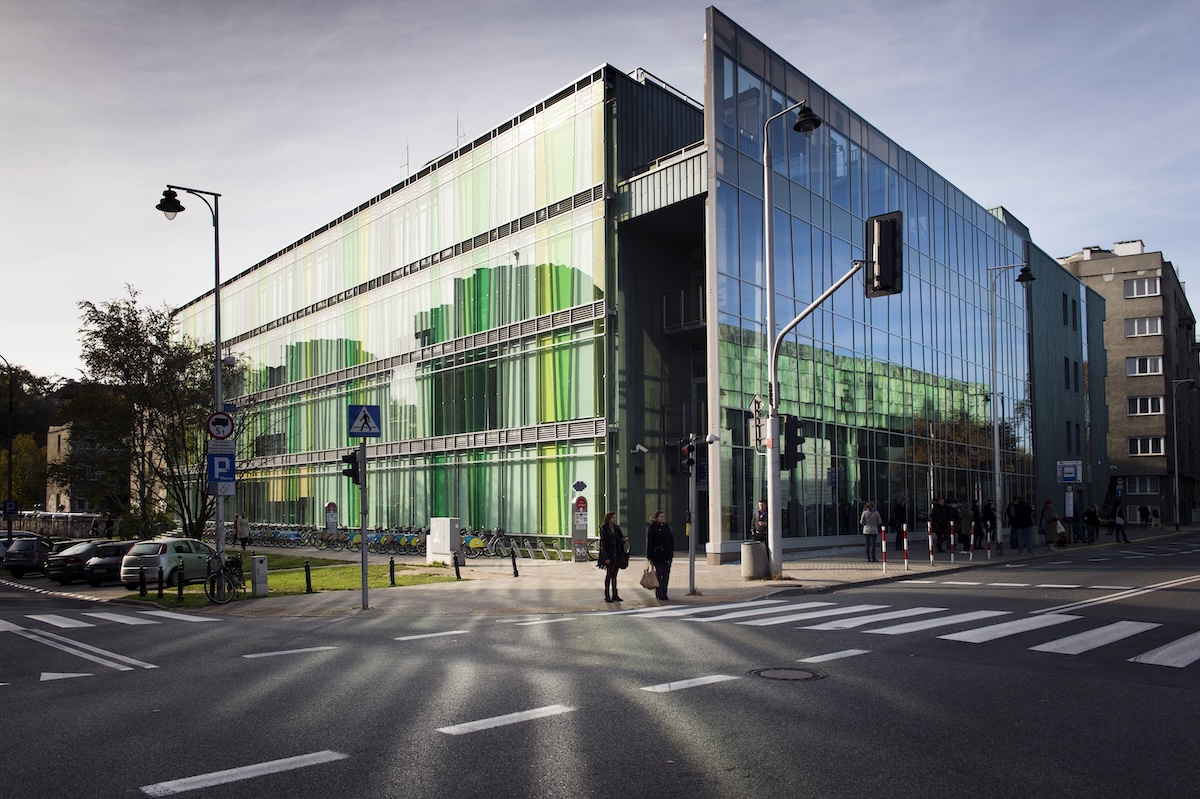
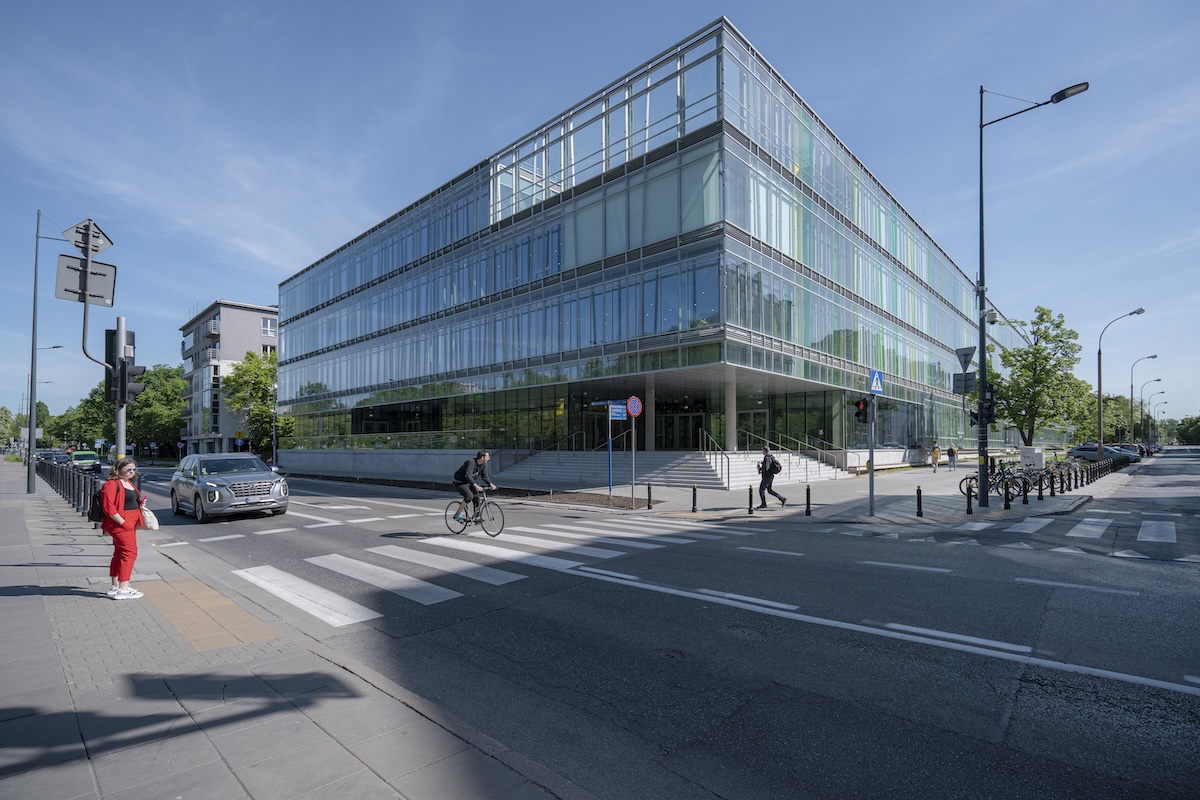
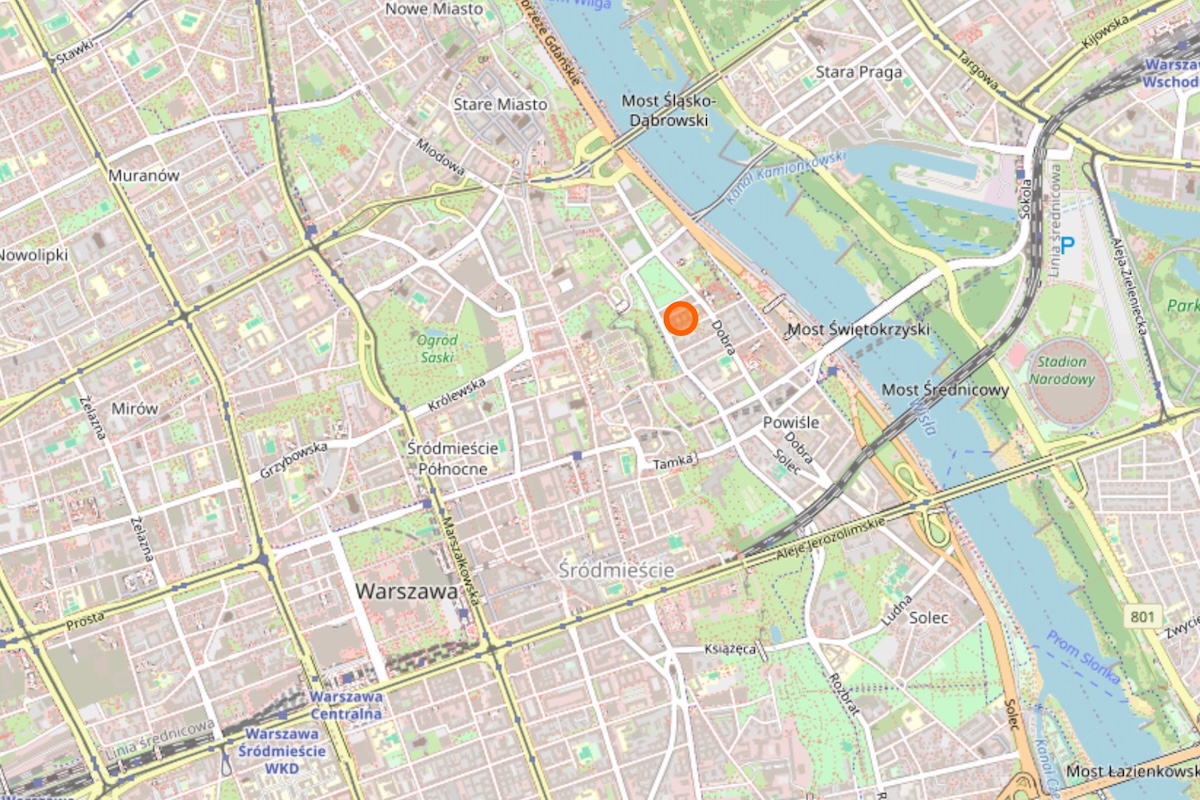
The SAMSA workshop takes place in person at the Faculties of Modern Languages (Wydział Neofilologii).
Address: 55 Dobra street at the University of Warsaw, Poland. (The closest entrance to the room is on Browarna.)
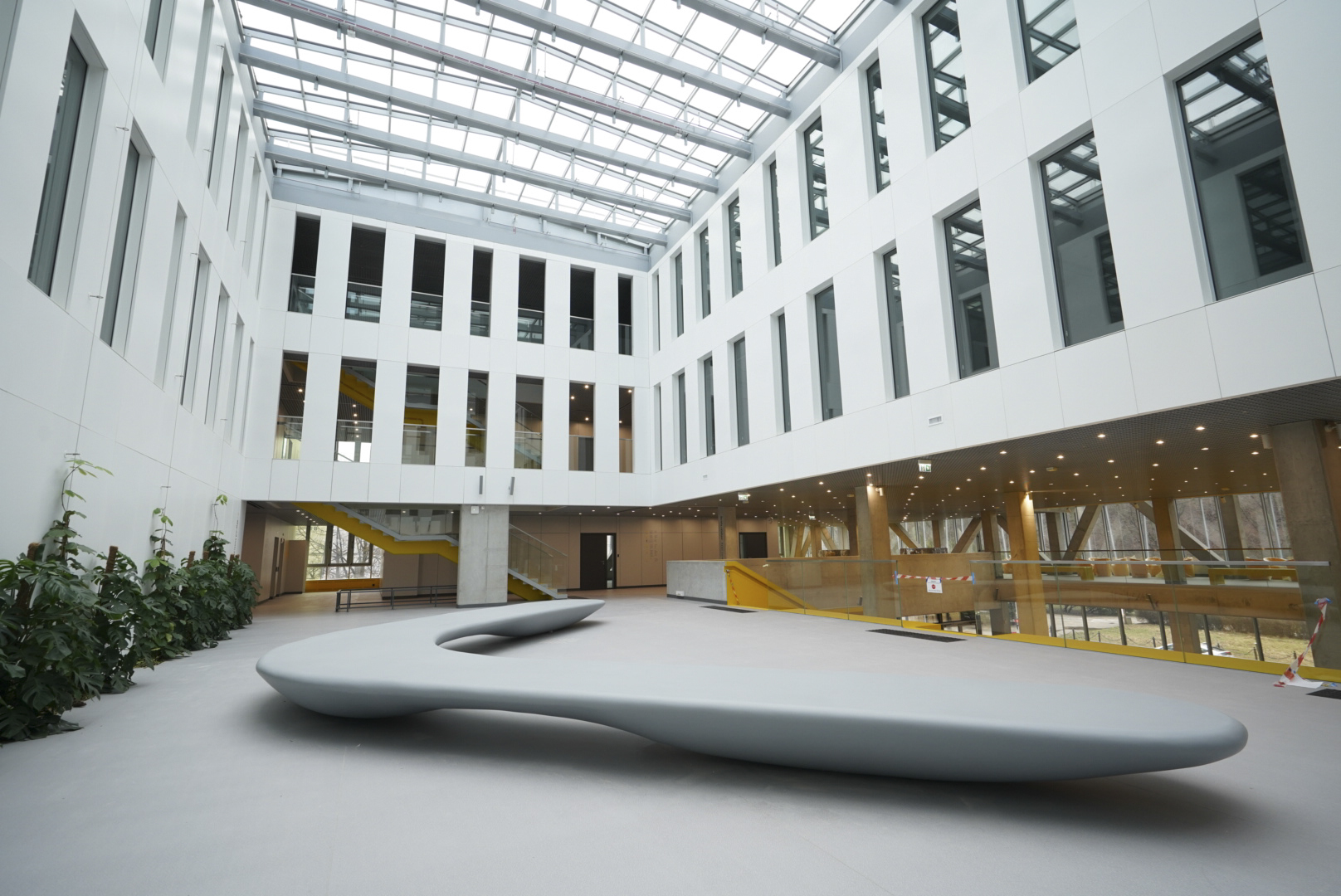
Sessions will take place in Room 1.110 (first floor, zero indexed).
Attending:
If you are interested in attending in the Workshop, please contact the organisers (please include all).
Financial support:
We gratefully acknowledge support from Le Trójkąt CNRS International Research Project.
Past editions:
SAMSA 2025, Warsaw